
What is Liberalism?

And freedom, oh freedom, well, that’s just some people talkin’.
The Eagles, “Desperado”
The most urgent political task confronting us today is the revitalisation of the democratic ideal in the face of drastic institutional backsliding and collapsing public support across the globe, including in long-standing democratic states.[1] But close behind in urgency, and interacting with it in complex ways, is the challenge of revitalising the political outlook broadly known as liberalism. Like democracy, liberalism finds itself beleaguered nowadays. This is due, in no small part, to a series of recent calamities attributable to decisions and policies associated with self-styled liberals.
Among these calamities: the severe disruption and economic precariousness consequent upon rampant economic globalization and the illusory quest for a borderless world; the gruesome toll of death and destruction wrought by military interventions that violate basic norms of the painstakingly constructed post-war international legal order; the massive growth of unaccountable corporate power, facilitated by economic globalization and the digital revolution, and the corresponding enfeeblement of the state’s effective capacity to serve the common good; and the excessive reliance on technocratic institutions, such as supreme courts or central banks, that withdraw important decisions from the arena of democratic contestation and confer the authority to make those decisions upon an expert class.
The facile way in which the compound expression ‘liberal democracy’ is used can beguile us into assuming that liberalism and democracy are somehow conceptually soldered together. And no doubt many of the calamities enumerated above are due to the policies and decisions of leaders who describe themselves as liberal democrats, often justifying those policies and decisions in the name of the democratic ideal, as with the ill-fated policy of ‘pro-democratic regime change’. But intellectual clarity demands that we resist, or at least scrutinize, the assumption that liberalism and democracy are inextricably bound together, which I shall do on another occasion.
I begin, however, with the question: what is liberalism? Characterising liberalism as a distinctive political outlook among others is a daunting project. Our task will be more tractable if we begin by distinguishing two distinct questions: 1) which features plausibly render a set of political ideas a member of the general class of liberal doctrines? and 2) which, among the sets of ideas properly characterizable as liberal, is the most compelling version of liberalism? My focus here is on the first question.
Liberalism is a large and diverse family of doctrines about political and social ordering which also have implications for personal conduct and character formation. It is an outlook to which those with widely divergent philosophical orientations have subscribed. Fidelity to the historical reality of the liberal tradition demands that this diversity be accommodated. Hence, one must be wary of hard-wiring into liberalism too many controversial commitments. Moreover, our characterization of liberalism should exhibit interpretative charity. While respecting the historical reality of liberal thought, we should characterise liberalism in a way that renders it intelligible that many people, inhabiting different societies and epochs, have found it to be an attractive political outlook. Interpretative charity enables us to present liberalism as a worthy interlocutor in the domain of political ideas.
In the spirit of both fidelity and charity, my hypothesis is that a political doctrine is properly interpreted as liberal insofar as it involves an embrace of the following five broad tenets: (1) the centrality of freedom as a political value; (2) a form of egalitarian individualism; (3) a strong emphasis on individual rights, especially in connection with protecting individual freedom; and (4) certain principles of social ordering, e.g. the rule of law, private property, free markets, and forms of citizen political participation, and (5) a broader ethos that both gives expression to the previous four tenets and that helps to sustain their realisation over time.
Different versions of liberalism will exhibit these tenets to different degrees and interpret them in sometimes radically divergent ways. But I think it is subscription to these five tenets that most illuminatingly explains why figures as diverse as Benjamin Constant, John Stuart Mill, T.H. Green, F.A. Hayek, John Rawls, Joseph Raz, and Martha Nussbaum all count as liberals notwithstanding very deep philosophical and policy disagreements among them and why liberalism is a political outlook worthy of serious consideration.
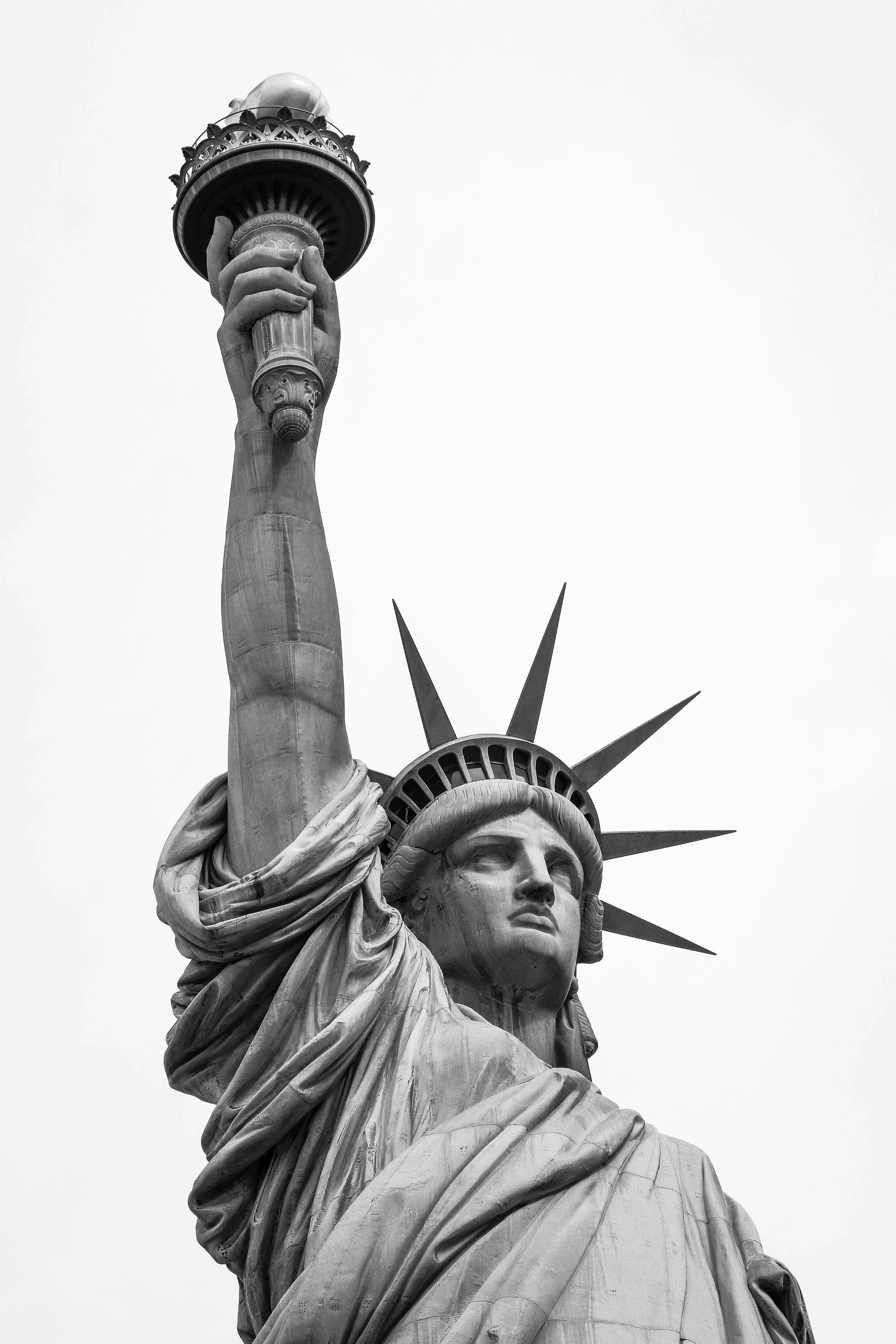
Photo by Brandon Mowinkel on Unsplash
1 Freedom
Most fundamentally, liberalism accords great significance to the value of freedom in political morality. This significance does not carry the implication that freedom is the only politically-relevant value. Liberals can readily admit the importance of other values, such as equality, justice, charity, which may conflict with freedom and even occasionally override it. Nor is a liberal committed to the implausible idea that free choice is a condition for deriving the benefits of any other value, so that only a freely chosen occupation or marriage can yield the goods, respectively, of accomplishment or love.
The significance accorded to freedom is manifest in the centrality in liberal thought of a range of familiar freedoms, e.g. to communicate one’s political and other convictions; to choose and practice a religious faith; to shape one’s individual life-style, including by deciding whom to marry or otherwise associate with; to choose an occupation and to engage in economic exchange; and to be protected from the threat of arbitrary arrest or imprisonment, among many others.
Of course, liberals differ in how they understand and defend the special value of freedom. In a rudimentary way, freedom can be disaggregated into two more specific values: autonomy and liberty.[2] Autonomy consists in the value of making an informed choice regarding the shape of one’s life, bringing to bear a critical appreciation of the relevant values in play when choosing from a range of options. Autonomy presupposes the availability of worthwhile options and sufficient information about them, capacities for practical reasoning including the ability to explore various options in imagination, the absence of manipulation and indoctrination, and a minimal level of material provision. Liberty, on the other hand, is a matter of the ability to pursue the choices one has made, not being blocked or hindered by interference from others, not just governments, but also corporate power, hostile public opinion, or other individuals.
Some forms of liberalism, of the libertarian variety associated with so-called ‘classical’ liberals like F.A. Hayek and Ludwig von Mises, place greater emphasis on liberty and are suspicious about an activist role for government in fostering the autonomy of citizens, e.g. through public schools or social welfare programmes. But, historically, this is far from being the canonical liberal view despite its self-conferred ‘classical’ label. Liberals who accord great significance to personal autonomy have also advocated extensive government intervention, in the form of access to education, availability of meaningful work, social welfare, among other kinds of provision, in order to make autonomous lives a real possibility for the great majority of people.
Then there is also the question of the status of freedom as a value. For many liberals, such as T.H. Green and Joseph Raz, freedom is a welfarist value, a key aspect of a good or fulfilling human life, alongside other such goods such as accomplishment, friendship, and understanding. Even if two otherwise identical marriages are equally happy, for example, the one that was freely entered into by both spouses will contribute more to their flourishing than the forced marriage. In addition to being an intrinsic good, freedom also has value from this perspective as a means for realising other aspects of the human good, such as the development of one’s talents, the acquisition of understanding or the pursuit of friendships.
But for other liberals – such as Thomas Nagel and Amartya Sen - freedom is a value that demands respect independently of any contribution it makes, whether intrinsic or instrumental, to how well anyone’s life fares. On this latter view, freedoms to deny the holocaust or to access pornography are not primarily to be upheld because they enhance the chooser’s well-being. On the contrary, doing these things may be wholly detrimental their well-being. Instead, they are to be upheld because of the respect owed to individuals as autonomous agents even when their choices are defective.
The weight liberals accord to these freedoms is shown by the demanding obligations – both positive and negative – they place formal institutions such as the state, business corporations, or churches as well as on individuals and groups. Exemplary here is Mill’s notoriously contested ‘harm principle’, which posits harm to others as the exclusive justification for deploying state coercion against an individual.
Some liberals go further and ground political authority itself in the consent of the governed – whether this be their actual, tacit or hypothetical consent – so that any legitimate exercise of political power ultimately traces back to the free choice of its subjects. But this ‘social contract’ theory of political legitimacy, although embraced in various forms by prominent liberal philosophers from John Locke to John Rawls, is no more inherent to liberalism than the invocation of a pre-political ‘state of nature’ is indispensable to talk of natural rights. Prominent liberals like John Stuart Mill and Joseph Raz dispense with the social contract.
2 Egalitarian Individualism
Liberal doctrines conjoin the emphasis on individual freedom with an underlying egalitarian individualism. In its strongest form, it affirms the basic moral equality of each and every individual human being – irrespective of race, sex, religion, ethnic origin, and so on - and, in some versions, identifies the locus of this equality in a threshold capacity for rational autonomy.[3] The broad, inchoate but arresting, idea which stands in need of considerable elaboration, is that there is some basic level at which each individual counts morally, and counts equally as the individual being of a certain kind (human being, person, etc) that they are.
This commitment to basic human equality can manifest itself in a diversity of sometimes incompatible ways. For a liberal who subscribes to natural rights, basic moral equality may crystallize in a schedule of universal moral rights that we possess simply in virtue of our humanity. By contrast, for a liberal who is both a utilitarian and sceptical about natural rights, like Jeremy Bentham, the equality may ultimately consist in the fact that each person is to “count for one and no more than one” in a “felicific calculus” aimed at maximizing general welfare.
Liberals draw quite divergent conclusions as to the kinds of social relations that are permitted by basic human equality. Historically, some have countenanced patriarchy or even, as in the case of both John Locke and John Stuart Mill, certain forms of slavery as consistent with basic human equality. Again, the underlying moral equality need not be viewed as leading to any robust egalitarian principle of economic redistribution, such as Rawls’ difference principle, which permits socio-economic inequalities only on condition that they maximise the position of the worst off. A proponent of a minimalist, ‘night watchman’ state, such as Rawls’ arch-critic Robert Nozick, can also count as a liberal for these purposes.
3 Individual Rights
Following on from the first two commitments is a strong commitment to individual rights. Indeed, a paradigmatic way in which liberals articulate the centrality of freedom is by defending a schedule of rights that protects the various freedoms identified in section 1, above, one that includes rights to free speech, freedom of association, freedom of religion, and so on. The underlying egalitarian individualism, referred to in section 2 above, plays a role in ensuring that these are rights possessed by all, which brings us within the ambit of the idea of natural or human rights.
The point of insisting on these rights is, at the very least, to emphasise that liberal freedoms do not merely serve the interests of individuals, such that their fulfilment makes for a better life for the right-holders, but that they also impose obligations on others to respect these freedoms. It is wrongful to violate these obligations, and various social measures – from legal sanctions to social opprobrium - are justified to discourage or punish rights violations.
Different liberals place these rights at different justificatory levels within their outlook. At one extreme, are those for whom certain individual moral rights are fundamental principles, not derived from any other background moral principles. These rights enjoin, among other things, respect for the free choices of their holders and erect powerful barriers to sacrificing individuals on the altar of the common good. The philosophers Robert Nozick and Thomas Nagel are among the most prominent exponents of this tendency. At the other extreme are utilitarians who accord a very downstream significance to individual rights, as perhaps heuristic devices (John Stuart Mill’s ‘secondary principles’, such as truth-telling and keeping one’s promises) that are useful guides in maximising utility or else as rights there are good utilitarian reasons to enshrine in law.
Alongside these philosophical differences in how deep rights go in a liberal scheme of values are differences in the list of rights that liberals endorse. Here positions range from those upholding an expansive list of rights, akin to the Universal Declaration of Human Rights, to more austere approaches that focus on civil and political rights or rights with exclusively negative corresponding obligations.
4 Principles of Social Order
There are certain characteristic principles of social order that are standardly taken by liberals to follow from the basic premises of the centrality of freedom and egalitarian individualism and the schedule of rights that flow from these premises. Chief among them are the following:
(a) the rule of law, conceived at least in the thin sense, which requires that law respect the human capacity for rational autonomy by being clear, stable over time, publicly accessible, capable of being complied with, non-conflictual, non-retrospective, and in which there is an impartial and independent judiciary that upholds the established law in a predictable fashion, as well as a legal profession that enables effective access to legal remedies [4];
(b) a system of private property, with individual legally-enshrined property rights at its core;
(c) a prominent but not exclusive role for free markets as a mechanism for ordering economic life,
where (b) and (c) are justified sometimes on the basis that there are rights to own property and engage in free market exchange, and sometimes on the basis that private property and free markets help generate levels of prosperity that, among other benefits, facilitate the realisation of individual freedoms; and
(d) some form of popular participation in political decision-making, though whether this must amount to a robust form of democratic political participation is, as I have indicated, an open question.
Contrary to both some liberals and their Marxist critics, the liberal commitments to private property and free markets are not straightforwardly to be identified with an embrace of capitalist modes of economic organization, although this obviously depends on how capitalism is understood. If capitalism consists in the vast and potentially limitless accumulation of the means of production in private hands it poses a threat to any liberal scheme of ordered liberty and equal rights; it is for this reason that John Rawls, the leading liberal philosopher of our age, insisted that his theory of justice was consistent either with a property-owning democracy or democratic socialism, but not with capitalism, even of the welfare-state variety.
Similarly, some liberals such as Cass Sunstein insist on including democracy as a principle of social order to which liberalism is inherently committed, but I find this proposition dubious. Liberals certainly have to acknowledge the importance of democracy, and adjust their political proposals accordingly, but not because adherence to democracy in any robust sense is already definitive of what it is to hold a liberal political outlook.
5 Ethos
Finally, there is a broader ethos that comprises a nexus of ethical ideals and virtues, on the one hand, and social norms and patterns of life that both sustain and give expression to those ideals and virtues, on the other hand. This ethos fosters the ongoing commitment to liberal political values among the citizenry and facilitates the effectiveness of liberal societies in giving practical effect to those values.
Precisely which combination of ideals, virtues, and social norms play this role will differ according to the particular liberal doctrine under consideration. Historically some of these ideals and virtues, and the background social norms and forms of life that sustain and express them, centre on toleration, civility, open-mindedness, patriotism, self-reliance, and a public-spirited commitment to social progress through peaceful reform guided by the exercise of human reason. This broader ethos encompasses moral values that go beyond anything that could be demanded as a matter or rights, and also in some cases beyond anything that is a matter of obligation.
One potent expression of the underlying liberal ethos can be found in a 1944 speech entitled ‘Spirit of Liberty’ by the American judge Learned Hand. Hand emphasised the nature of this spirit as an ethos rather than a set of formal legal and institutional structures – “it lies in the hearts of men and women; when it dies there, no constitution, no law, no court can save it... While it lies there, it needs no constitution, no law, no court to save it”. And he went on to characterise it as follows:
The spirit of liberty is the spirit which is not too sure that it is right; the spirit of liberty is the spirit which seeks to understand the minds of other men and women; the spirit of liberty is the spirit which weighs their interest alongside its own without bias; the spirit of liberty remembers that not even a sparrow falls to earth unheeded; the spirit of liberty is the spirit of him who, near two thousand years ago, taught mankind that lesson it has never learned, but has never quite forgotten - that there may be a kingdom where the least shall be heard and considered side-by-side with the greatest.[5]
This credo, culminating in a dramatic invocation of an ideal of imitatio Christi – ‘Be ye therefore perfect’ – is a far cry from the notorious Kantian hypothesis that justice can be fully achieved even among a ‘nation of devils’ provided that institutions and incentives are structured in the right way.
In a similar but less demanding vein, Michael Walzer has written recently of liberalism as a mind-set characterized in ‘moral rather than political or cultural terms’ and compatible with a range of ideological commitments, including democracy, feminism and socialism: ‘we are, or we aspire to be, open-minded, generous and tolerant. We are able to live with ambiguity; we are ready for arguments that we don’t feel we have to win. Whatever our ideology, whatever our religion, we are not dogmatic; we are not fanatics…a liberal is someone who ‘doesn’t have a small mind.’’ [6]
A liberal society, according to this fifth tenet, cannot be truly realised without an anchoring in the souls of its citizens. To this extent, liberalism as a political outlook bears a relation to the much older sense of ‘liberal’ or ‘liberality’, according to which it refers to a cluster of virtuous traits such as generosity, public-spiritedness, fair-mindedness and openness in one’s dealings with others, and in general what Mill called ‘high thoughts and elevating feelings’.[7] However, under the impetus of liberalism’s egalitarian individualism, these admirable personal qualities are no longer viewed as confined to an aristocratic elite with the leisure and resources to cultivate them but as ideals to which all members of society should aspire.
6 Conclusion
Allegiance to the five tenets of liberalism is compatible with considerable divergence in how each of these tenets is fleshed out and defended, as well as in the relative emphasis accorded to each of them and the inter-relations among the five tenets characterised. It is also compatible with quite fundamental background philosophical differences regarding big philosophical questions such as the existence of God, the objectivity of morality, and the nature of personhood, and the freedom of the will. And, of course, the five principles allow for wide latitude at the level of political policy regarding such matters as the free trade, immigration, criminal justice, environmental protection, taxation, social security, and so on.
Finally, this characterization of liberalism is obviously controversial, and it will be rejected even by liberals who nonetheless can be plausibly interpreted as embracing the five tenets I have enumerated. They will simply not see in those tenets what it is that makes them liberals. But this is the fate of any characterization of an outlook as protean as liberalism. The ultimate test is the work that any candidate specification of liberalism can do for us in advancing our political thought and practice. [8]
NOTES
[1] See, for example, the UK study which found that 52% of the 2,000 13-27 year olds surveyed would agree that ‘the UK would be better with a strong leader in charge who does not have to bother with Parliament and elections’, Gen Z: Trends, Truth, and Trust (January 2025) https://assets-corporate.channel4.com/_flysystem/s3/2025-02/Gen%20Z%20Trends%20Truth%20and%20Trust_0.pdf For similar trends across the Western world, including increased disillusionment with democracy among the rich, see Roberto Stefan Foa and Yascha Mounk, ‘The Danger of Deconsolidation’, Journal of Democracy 27 (2016).
[2] See James Griffin, On Human Rights (Oxford University Press, 2000), for this distinction.
[3] See especially the work of Jeremy Waldron, God, Locke, and Equality (Cambridge University Press, 2002) and One Another’s Equals: The Basis of Human Equality (Harvard University Press, 2017).
[4] See John Tasioulas, ‘The Rule of Law’, in J. Tasioulas (ed.) The Cambridge Companion to the Philosophy of Law (Cambridge University Press, 2020).
[5] Learned Hand, ‘Spirit of Liberty’, 1944
[6] Michael Walzer, The Struggle for a Decent Politics: On “Liberal” as an Adjective (Yale University Press, 2023).
[7] John Stuart Mill, On Liberty and Other Essays ed. J. Gray (OUP, 1998), p.70.
[8] To give just one example, von Mises characterises liberalism as the application of science to social policy with the aim of advancing material welfare. Ludwig von Mises, Liberalism: The Classical Tradition (1927) (Liberty Fund, 2025), p.xix. It pursues this objective by confining government activity to ‘guaranteeing the protection of life, health, liberty, and private property against violent attacks’, p.30.